
Merger & Demerger
Published on
February 01, 2026
Merger & Demerger
(A) Merger :-
A merger is the combination of two companies into a new single entity, often resulting in a new name, shared ownership, and management structure. Companies typically merge to gain market share, reduce costs, expand into new markets, or create synergies that make the new company stronger than the two separate ones were individually. A merger is a business deal where two existing, independent companies combine to form a new, singular legal entity. Mergers are voluntary. Typically, both companies are of a similar size and scope and both stand to gain from the transaction.
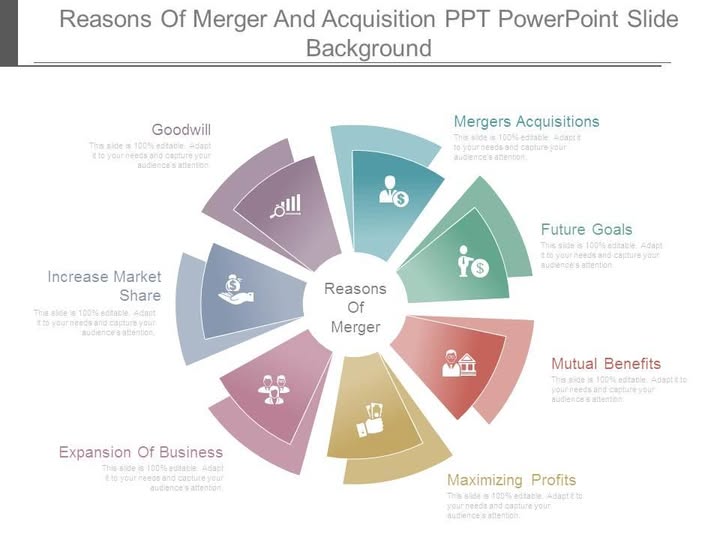
Mergers happen for a variety of reasons: They can allow each company to enter a new market, sell a new product, or offer a new service. They can also reduce operational costs, improve management, change pricing models, or lower tax liabilities. Ultimately, companies merge to increase size, scale, and revenue. In other words, mergers help companies make more money.
Companies seek mergers to gain access to a larger market and customer base, reduce competition, and achieve economies of scale. There are different types of mergers that the companies can follow, depending on their objectives and strategies. A merger is different from an acquisition. Mergers happen when two or more companies combine to form a new entity, whereas an acquisition is the takeover of a company by another company.
How Mergers Work :-
Mergers are often spearheaded and facilitated by an investment banker. They source deals, value companies, forecast outcomes, and make sure both companies have their houses in order (a process known as due diligence). Corporate lawyers also oversee M&A deals, ensuring, among other things, that the transaction complies with federal and state regulations.
Mergers are generally funded by cash, equity (stocks), or both. When two companies merge, shareholders in each company are issued stock (equal to the value of their old stock) in the new company.
After the merger, companies will secure more resources and the scale of operations will increase.
Companies may undergo a merger to benefit their shareholders. The existing shareholders of the original organizations receive shares in the new company after the merger.
Companies may agree to a merger to enter new markets or diversify their offering of products and services, consequently increasing profits.
Mergers also take place when companies want to acquire assets that would take time to develop internally.
Types of Merger:-
1. Congeneric/Product extension merger
Such mergers happen between companies operating in the same market. The merger results in the addition of a new product to the existing product line of one company. As a result of the union, companies can access a larger customer base and increase their market share.
2. Conglomerate merger
Conglomerate merger is a union of companies operating in unrelated activities. The union will take place only if it increases the wealth of the shareholders.
3. Market extension merger
Companies operating in different markets, but selling the same products, combine in order to access a larger market and larger customer base.
4. Horizontal merger
Companies operating in markets with fewer such businesses merge to gain a larger market. A horizontal merger is a type of consolidation of companies selling similar products or services. It results in the elimination of competition; hence, economies of scale can be achieved.
5. Vertical merger
A vertical merger occurs when companies operating in the same industry, but at different levels in the supply chain, merge. Such mergers happen to increase synergies, supply chain control, and efficiency.
(B) Demerger:-
A demerger, sometimes written de-merger, is when a company is divided up into its constituent parts. The opposite of a merger, a demerger usually happens for the purpose of selling or liquidating a business unit, or empowering it to operate on its own as a separate legal entity. It sounds similar to a company divestiture or deacquisition – and indeed some demergers are divestments – however there is more than one type of demerger, which we’ll cover below. But first let’s look at reasons to demerge.
1) Demergers are situations in which divisions or subsidiaries of parent companies are hived off into independent corporations.
2) The process for a demerger can vary depending on the reasons behind the implementation of the split.
3) Generally, the parent company maintains some degree of financial interest in the newly formed corporation, although that interest may not be enough to maintain control of the new corporate entity.
Types of demerger
1. Spin-offs
In a company spin-off, the parent company separates off a business unit and makes it its own entity. Shares in the newly created company are distributed to existing shareholders of the parent via a dividend. In a spin-off transaction, the parent can, if it wishes, retain an interest in the spun-off company (as long as it is no more than 20%) but no funds are raised as no stock is sold.
2. Splits
Split-off
A large company consisting of multiple businesses may want to demerge them into separate companies. In a split-off, the shareholders are given the opportunity to exchange their Parent Co shares for new shares of the subsidiary (Split Co). This “tender offer” often includes a premium to encourage existing Parent Co shareholders to accept the offer.
Split-up
In contrast to the above, in a split-up the parent company does not survive. It is liquidated into the new companies that are created as part of the transaction.
3. Carve-outs
Spin-offs and split-offs can be preceded by an IPO in which a portion of the share of the subsidiary is sold to the public, with the proceeds either retained by the subsidiary or distributed to the parent. This is called an equity carve-out .
The significant difference with this type of demerger is that it results in an injection of cash whereas spin-offs and splits do not.
In reality, more than one type of demerger is often executed simultaneously. For example, an equity carve-out is typically executed ahead of a split-off to establish a public market valuation for the subsidiary’s stock.